Wednesday, January 20, 2010
"No No!"
So surely enough, Mr. Brown became MA's first Republican Senator in over 30 years and its first Republican member of Congress in over a decade, and surely enough, liberal commentators attempted to spin this as a signal that Democrats... really need to pass healthcare. Because, you see, the reason that Martha Coakley lost, besides that she dissed the Red Sox (come on now, how many voters do you really think would otherwise like Senate Democrats to maintain a 60 seat majority but just couldn't bring themselves to vote for someone who doesn't know that Curt Schilling pitched for the Red Sox?), is that Democrats have taken too long to get healthcare done, can't govern. So they sensibly elected someone who doesn't want to get healthcare done. So don't misinterpret the results of this election, nervous House Democrats - if healthcare dies, Democrats die. So say Rachel Maddow, Keith Olbermann, Ezra Klein, the folks at The New Republic, etc. Well Maddow and Olbermann are sub-literate, in spite of Maddow's being a Rhodes Scholar in a past life, so we can forget them. But some pretty smart people take this view, including, it would seem, the folks at the White House, who aren't backing down, and more usefully for my purposes, a couple of professors of political science from Yale and Georgetown who put forth this argument in the Washington Post this afternoon. According to Professors Hacker and Hopkins:
[Congressional Democrats] should ask themselves: Would they rather defend a successful law or an unsuccessful year-long legislative imbroglio? As was true after the Clinton health plan went down in flames in 1994, failing to pass health-care reform would cripple public perceptions of the Democrats' ability to govern. And as was true in 1994, the Democrats most endangered would be moderates, not liberals. The Blue Dogs may be hearing the loudest calls to turn tail. But they stand to lose the most if the governing reputation of their party goes down with reform.
Would they rather defend a successful law or an unsuccessful year-long legislative imbroglio? Hmm. Either way, of course, they're going have to defend the year-long imbroglio and the fact that they spent a year on healthcare reform that won't go into effect for years while unemployment was rising to 10%. So the question is really would they rather defend a successful law + imbroglio or just defend the imbroglio and their choice to quit. That said, the force of this argument is that "successful" laws are more popular than failures to make laws. And in a vacuum, I'd agree that voters would probably rather see Congress doing stuff than failing to do stuff, although even there I'm not so sure, because what was the last time you've seen Congress get anything done that anyone was particularly happy about? Voters are perhaps most content when Congress simply doesn't do anything. But yes, failure never looks good.
However, a "successful" law only trumps a failure to get a bill through if voters actually believe the content of the law is worthy of the name success. Right now you have an electorate which in large part believes, probably delusionally, that the healthcare reform being proposed is the equivalent of going around harpooning dolphins. Or, if they don't believe that, they think it's a great mystery (a thousand pages long, so complex and impenetrable!) that will probably make their lives worse. Or they're cranky liberals who think it should be more ambitious, that the current package is a big corporatist giveaway to insurance companies. Why a politician would want to go around bragging of his success in spending a year of Congress's valuable time passing a measure that many of his voters believe is the equivalent of going around harpooning dolphins, and many of his supporters think isn't nearly good enough, I do not know. It would strike me that a better message would be to say, "for some strange reason I thought it would be best for this nation if we started slaughtering dolphins, but then I got a lot of mail from my constituents to the contrary, and I notice that members of my party - the one that's into killing dolphins - have started losing elections in states where they shouldn't, so obviously my party isn't very popular at the moment and it probably has something to do with the dolphin-killing legislation that we've been spending the past 8 months doing nothing but talking about and attempting to get through. I now realize that at the very least, we were wrong to focus on dolphin-killing at a time when people are losing their jobs, and that we probably failed to explain how awesome and great for our economy dolphin-killing really is, and that in fact the legislation we were proposing did not actually, in any way, propose to actually kill dolphins. Your loyal Congressman would never, ever support killing dolphins. But it's too late now to convince you of that, so sorry for spending all this time on the dolphin issue; I now plan to focus my efforts on things more pressing/things you actually want." Or if he's insane he could hope that, once the legislation that has falsely been labeled as dolphin-killing legislation gets passed, people will suddenly take a new view of the whole thing, instead of getting much angrier than they are now once what they imagine to be a dolphin-killing measure actually becomes law.
Hacker and Hopkins then point out that Democrats failed to pass healthcare reform in 1994, and look, they got killed because people thought they couldn't govern. I'd really expect better from a couple of presumably pretty bright professors in the subject. Not to repeat myself, but this is like saying that it was sunny on Election Day in 1994, so Obama better go and secretly seed the clouds if he wants to retain his congressional majorities. This is also like saying that the reason Republicans lost in 2006 is because they failed to reform/destroy Social Security. If only they had succeeded, then the voters would have loved them so. No no. In that scenario, the Republican Party wouldn't have thrived, it would have practically ceased to exist. The reality is that a lot of things happened from 1993 to 1994; in fact, a lot of things happened from 1993 to 1994 that proved Congressional Democrats could govern. They passed a successful tax hike, they passed a successful trade agreement that tons of people in their own party hated, they passed successful gun control laws, they passed a successful crime bill. They actually got an enormous amount of stuff done. (Unfortunately for them most of it was stuff the median voter didn't like.) The one thing they didn't get done was massively unpopular. And the reason voters kicked Democrats out was because they failed to pass the massively unpopular item on their agenda? I don't think so.
Finally, Hacker and Hopkins argue, partly towards the claim that the failure of health reform killed the Democrats in 1994, partly to warn moderate Democrats that the effects of killing health reform would be disproportionately visited on them, that moderate Democrats went down the hardest in 1994. Which just goes to show, I suppose, that voters in 1994 really were punishing the Democrats who caused health reform to fail, not the ones who were pushing for it in the first place. But that's backwards. If you're a liberal Democrat, you usually come from a safely Democratic district. Otherwise you couldn't get away with being a liberal Democrat. If you're a moderate Democrat, you're more likely to come from a non-safe district. So yes, anytime a party does something drastically unpopular, the ones who get punished are, paradoxically enough, the moderates who weren't necessarily that in favor of it. That's why all the extremely conservative Republicans haven't gone anywhere and why the moderate Republican members of Congress are currently a virtually extinct species. They got blamed by their moderate constituents for what their extremist colleagues pushed through, because when it comes down to it, votes don't know jack shit about what their individual representative is for. They just know his party affiliation and a little about what his party has been up to. So of course the moderate Democrats have the most to fear from the passage of unpopular legislation, which is exactly why they should work to ensure that health reform never gets passed and why they should make a big public fuss of apologizing for having fucked up.
Finally, as for Obama and the leadership, they currently find themselves in the worst of all political worlds. The second Brown won, Democratic members of Congress (wisely) started panicking and saying maybe they should try reforming healthcare some other time, and the White House and the leadership, which hasn't seemed to have given this situation a great deal of thought, said they still plan to somehow get reform through. So a mere 24 hours after election night, it's already too late for the White House to get out in front of this and quit. If they did now, it would just look like face-saving and flip-flopping. So the rank and file members get to claim the "I listened to the people" high ground, while the White House and leaders, at best, get to claim the "we're getting bullied by our members and plan to quit" low ground, and at worst, are going to get publicly beaten by members of their own party. At that point, Democrats do begin to look like a party that doesn't have its shit together. Unilaterally quitting, however, would not have that effect. But that may be off the table - though perhaps Obama could pull a dramatic quit in next week's State of the Union.
Of course, this all ignores the question of whether healthcare reform is actually a good thing. Maybe it is and maybe Congressional Democrats have a moral obligation to give us the gift of healthcare reform, even though we don't seem to want it, and go down to defeat for having done so. Years later we'll thank them. Perhaps. The uninsured, at least, would certainly be grateful. My only issue is that the obvious desire of so many left-leaning analysts to get health reform done has led them to construct this bullshit political analysis that claims that voters reward politicians for doing really unpopular things, and punish them for failing to do unpopular things. And this strain of analysis of 1994 and the costs and benefits of failing to pass unpopular legislation in general could ultimately take us to a place where voters have no check on unpopular legislation pushed by the White House - because these cheerleaders will always be there to assure Congress that things will be even worse politically if they don't get something done. The whole point of representative democracy is voided if the representatives come to believe that passage of any bill is always better for them politically than failure of any bill.

Monday, January 18, 2010
What Democrats Should Do (If They Care To Win Elections)

I don't know who reads what I say about politics, but I just had to make a couple points. The polls all say that tomorrow Massachusetts will elect its first Republican Senator since 1972. The last time Massachusetts went for a Republican in any national election, it did so for Reagan in 1984, in a year in which Reagan only failed to carry his opponent's home state and the District of Columbia. It's true that Massachusetts has had a lot of Republican governors in recent years, but when it comes to national politics, no one can deny that MA's a very liberal state. Of course, liberal commentators will try to palm off this remarkable defeat on the crappiness of their party's candidate, her patrician affect and the fact that she barely tried. But, while she may have ran a terrible race, that doesn't explain away her losing a state that Obama carried by 26 points just 14 months ago. A bad campaign, or an uncharismatic candidate, can only have so much effect on an electorate's underlying partisan breakdown. Otherwise, John Kerry (who has a hell of a patrician affect himself) wouldn't be Massachusetts's other Senator. The fact that voters in MA understand that by electing Brown, they're depriving the Dems of their crucial 60th vote, only underscores that this election is largely about a rejection of Democratic policies and not just a matter of purely personal discontent with Martha Coakley. (Also the fact that Brown's whole campaign has been about promising to go to Washington and defeat health reform.)
Given, then, that one of our nation's most liberal states is poised to show at the polls that even it doesn't like the Obama health package, what should Democrats do? They could ram the bill through even with only 59 votes in the Senate, simply by getting the House to adopt the Senate bill that's already been passed unchanged. A lot of House Democrats aren't crazy about the Senate bill, but suppose that they're willing to take the Senate's version of health reform over none. Should they do so as a matter of politics? Of course not. Why would a House Democrat from a toss-up seat vote for a bill that even Massachusetts doesn't like? The logic seems straightforward enough.
However, the reasoning behind voting against a bill that consistently polls awfully would also seem simple enough, and yet Democrats have been willing to vote for health reform so far. How come? The answer is that they're relying on a tragically inaccurate misreading of recent political history. The reason, the argument for voting for health reform goes, the Democrats lost the House in 1994 for the first time in 40 years is because they failed to get healthcare passed. Because Hillarycare went down in flames, the voters rejected the Democrats for failing... by bringing in the minority party that helped kill Hillarycare.

(Why exactly was a First Lady that had never held elective office put in charge of healthcare anyway?)
As should be obvious, this analysis of 1994 makes no sense; if voters were mad at the Democrats for failing to get health reform done, why would they punish them by electing reform's opponents? Does anyone really believe that had Hillarycare been passed, the Democrats would have held on to Congress? Isn't a much more credible analysis that Hillarycare failed to pass because it was so unpopular and that voters then punished Democrats, in part, for attempting the thing in the first place? Yes, but it's even simpler than that. A lot of the reasons the Democrats lost in 1994 were non health-related. In 1993, the Democrats raised taxes before we had gotten out of the recession. The hikes were so unpopular that Gore had to break a tie in the Senate and the bill passed by just one vote in the House. Clinton and the congressional Democrats also did other unpopular things, like passing gun control and NAFTA, the free trade agreement with Canada and Mexico that was supposedly going to suck millions of American jobs away. And yes, they also failed to pass a very unpopular health reform bill. Had they succeeded, they could have lost worse.Because, however, the Democratic Party's been taken over by ideologues, or at least, people who actually believe in things (unlike Clinton, who arguably became - see welfare reform - our most conservative President since Hoover once he saw that voters didn't want him to govern as a liberal), the party, conned by health reform wonks masquerading as political analysts, has bought into this purely imaginary reading of history, one which says that they're better off passing a really unpopular bill than not passing one, because if they didn't pass anything 1994 would happen all over again. (Never mind that it's not even as if the poor ignorant masses will quickly see the benefits of reform once it's through; for the most part they come several years down the road.) And so they intend to go and commit political suicide. Or at least most of them do; surely a few House Democrats will understand the significance of the results in MA and peel off, citing irreconcilable differences between the House bill and Senate bill, at which point the bill in its present form will die. But instead of allowing reform to die in a chaotic process where a handful of no-name Texan Democrats come to their senses and kill healthcare, which would make Obama and the Democratic leadership look like losers, why not manage the fallout? How brilliant would it be for Obama to come out and acknowledge that he was wrong, that he wasn't elected to reshape the health insurance market? The speech practically writes itself. I listened to you, the American people, he'd say, and you don't want this. Partly it's my fault; I did a horrible job of explaining what reform entails. I also failed to take into account how happy a lot of you are with the system as it exists currently, I made too many backroom deals with drug and insurance companies to get this all done, and I took my eye off the all-important jobs ball. I'm asking Harry Reid and Pelosi to withdraw this bill and look to passing a second stimulus. Then in November they run on the economy; it still sucks, they'd say, but the GOP got us here, we arrested the decline, and now we're starting to see recovery. Fortunately for Obama, he hasn't actually really done much, and very little that people don't like - nothing equivalent to NAFTA or raising taxes. He can still do okay in 2010 so long as he kills his most unpopular policy proposal.
Thursday, December 24, 2009
Up In The Air Is An Awful Movie
As longtime readers of this space know, I happen to think Armond White's a first-class contrarian idiot. For example, recently he claimed that "all [Sandra] Bullock’s films promote an edifying sense of human experience—she has an instinct for what people like to see," a claim which (a) is utter bullshit and (b) a claim which Armond himself doesn't even believe in - see his review of The Proposal mere months ago , or his for-once on-target evisceration of Crash - and is just making to befuddle the idiots who read his shit into thinking he's some sort of genius intellectual who sees things beyond the ken of the 99.999999% of the world that thinks Bullock's a hack. That said, the nice thing about Armond White is that he's the one critic in America, aside from the good people at Slant and Reverse Shot, who I can always count on to see through the Oscar bait de jour - though of course he usually does so for the wrong reasons. Nevertheless, I was happy to come home from the Tray Family's Christmas Eve Movie Viewing and see that Armond had trashed Up In The Air.
That pointless prelude out of the way, Up In The Air might be the worst Best Picture favorite in quite some time. Unfortunately, most of the critics who have bashed UITA have done so for purely political reasons - "the movie doesn't care enough about fired people." J.R. Jones of the Chicago Reader went so far as to accuse the movie of being a modern day Cary Grant film - and mean that as a bad thing! Frankly, if this thing were remotely comparable to a modern day Cary Grant film, I wouldn't care if it glorified cannibalism or the slave trade. (Depending, of course, on which Cary Grant film this thing would supposedly be a modern day version of - he made a lot of bad pictures.) No, the trouble with the movie is that there's just simply nothing aesthetically, dramatically, comedically, intellectually, whatever adverb you like, good about it.
Aesthetically, the movie's composed of several types of shots. First, you've got your pointless quick-cut montages of Clooney packing his luggage, or negotiating an airport, or going to a wedding. Second, there are a lot of aerial shots of cities and slightly tilted establishing shots of cheap hotels that look like something I might've shot in high school photo class. (For some strange reason, the director saw fit to actually shoot in each of the many cities where Clooney's character fires people, although he never actually shows you these cities, so that, with the exception of differences in weather, every location looks absolutely the same as every other.) Third, you have your conversations. Each and every one is all shot-reverse shot, and each of these shots is an over the shoulder shot, with the listener's shoulder or ear completely out of focus. Over the course of the film, you get very familiar with what George Clooney's blurry shoulder looks like. Everytime Clooney speaks to Vera Farmiga or whomever, you see his face and her shoulder; then, when she has her line, you see her face and his shoulder. There are no reaction shots, no off-camera speakers, no close-ups, and very rarely any shots with more than one interlocutor in a frame; it's just this cutting rhythm ad nauseam. Fourth, in moments of high emotional impact, you just might get a long shot of 10 seconds or less, with the camera banally zooming back to indicate so and so's loneliness.
With the director bringing absolutely nothing cinematically to the table, to the point where, by dint of his inability to ever hold a shot for more than 5 seconds, he manages to kill each and every scene where the audience might be actually moved to something resembling an emotional response to what's going on on screen, the movie's forced to rely completely on its actors and its script. Unfortunately, Clooney's a void. I know he's supposed to be something of a void - that's the point! - but he's such a bland, charmless (if handsome) void that the movie becomes quite a bore, as he's in every scene. He's slick enough, but doesn't have a personality to speak of. Exchange Clooney for Aaron Eckhart, who starred in the director's first film, Thank You For Smoking, and you might begin to have something watchable.
As for the script, it's a joke; the whole thing reads and even sounds like its own high school English paper explication of itself. Every event in the movie is freighted with symbolism or cheap irony, every fifth line is a little thesis statement. The Cornell grad who comes in to Clooney's termination firm and convinces his boss to switch to firing by webcam is shocked that her boyfriend broke up with her by text. The irony never seems to dawn on Miss Cornell, presumably to make us feel smarter for "catching on" to these hidden depths. Clooney gets his 10 million air-miles card at, of course, the very moment in the story where he's finally begun to yearn for a solid home. When the pilot comes to his seat to congratulate him and asks him where he lives, Clooney replies, "I live up here." Deep! There's even a pathetic third act where he comes back to his native Wisconsin to attend his sister's marriage and discovers how real middle-class people with real relationships live. At which point he takes his fuckbuddy/partner in frequent flyer derring-do back to his high school and gets back in touch with his childhood. At this point in the film, a happy little indie-folk song starts playing, and the movie is so badly directed that when he's sitting in his old high school gym with fuckbuddy and his sister calls to tell him that his future brother-in-law suddenly has cold feet and Clooney needs to come to the church fast to change future bro-in-law's mind, the song keeps playing. Either suggesting that the editing was done by a robot, or worse, that the potentially dashed marriage only matters to the director, and is supposed to matter to us, on the level of Clooney returning to his family and doing cutesy little family business shit, in which case the jaunty indie-folk playing over the "your sister is getting dumped by her fiance on the day of her wedding" call would make sense... in a perverse way. This sort of trivialization of other people's real lives as some kind of vehicle to Clooney's process of self-discovery goes on throughout the film, if you can even call this teledrama a film. Critics of more liberal sensibilities have jumped on the similar way the armies of terminated workers (including one cavalierly glossed-over suicide) are treated by the movie, but the problem isn't really political; it's a blithe indifference to anything in the film but Clooney's trite personal drama. The thing is though that the movie could get away with this sort of solipsism if it knew how to make Clooney's character matter to us, but it fails even at that, ultimately ceasing to care about the character as a person at all and treating him as a pat parable of our collective selfishness and alienation. Which hardly seems to be an accurate diagnosis of That Which Ails America; as the movie somehow forgets there are a whole lot more faceless fired people in America than there are George Clooneys. But really, who even cares about the muddled message of this piece of junk on stilts when there are ever so many things wrong with it besides whatever it's feebly trying to say?
Sunday, December 20, 2009
Yeah, I'm SILKK THE SHOCKER!!! - and Yeah, That's Me
Just wanted to briefly call your attention to this No Limit classic, which I enjoyed playing repeatedly during my contracts exam this Friday. I've always found the whole "if you're not a soldier, then what's your purpose in life" concept that runs through the No Limit Soldiers tracks strangely attractive. Obviously there are lots of meaningful non-No Limit Soldier lives, but I guess I'm attracted to the view that there's some single type of valuable life to be led out there (like being a genius attorney), and that all others are pointless at best. I could ramble for a while about the similar types of essentialism at work in Westerns and 90s gangsta rap (although the best Westerns deconstruct/interrogate the masculine ideal, see for example The Man Who Shot Liberty Valance, but then, perhaps you could argue that the best gangsta rap - Mobb Deep for example with their preoccupation with the 'foul'-ness of their deeds - deconstructed its ideologies?), but anyway, I love No Limit, it's dumb but it's good dumb. Silkk, for once, has the best verse on his own song. Actually, you could make a case for Mystikal, but Mystikal on No Limit posse tracks always annoys me, he detracts from the so amateurish it's genius vibe. Not sure why I like Silkk's "I'm a psycho" put-on so much, but I do and it always cracks me up when he goes:
So don't flip me, cuz you'll end up empty
and then I'll reload
and reloadandreloadand reloadandreload
whole barrel explode!!!!
Also when he explains that 'yeah, I'm Silkk The Shocker, and yeah, that's me.' Most of all when he says, "mention meeeeee to my enemieeeeees, they thinking of PAIN" and sounds like an adorable hyperactive five-year-old doing a Tupac imitation on Youtube. In fact, describing TRU as a band of three little kids, each doing his own very different and usually very bad Tupac imitation, would not be too far off the mark. Though such a description does grave injustice to C-Murder.
Saturday, December 12, 2009
Wednesday, December 9, 2009
This Wasn't Actually Funny,,,
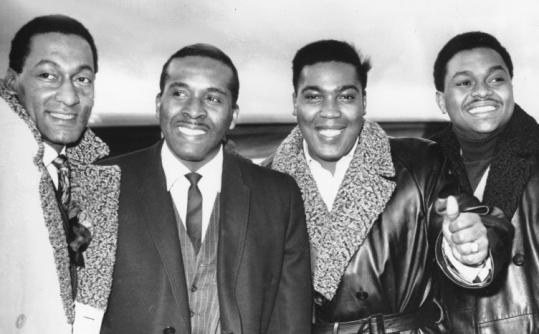
but every night poor Anderson Cooper, in the little sneak preview of his show he does during Larry King, says how he's going to keep some officeholder or would-be officeholder or corporate exec honest. For instance, "was Sarah Palin totally full of shit in her new book? We're keeping them honest." Well that's nice, I guess, if a little sloganeering and dense, trying to position your cable news channel as the one that actually reports on stuff and holds politicians' feet to the proverbial fire. So last night in the middle of Larry's horribly disappointing interview with the Jackson 5 ("the only one who isn't here is Michael" - he's, don't you know, dead) Anderson shows his face and says:
A woman commits suicide at a James Arthur Ray spiritual retreat. Remember the guy who killed three people in a sweat lodge? Did Ray try to cover up this death? We're keeping 'em honest.
Yeah! We're keeping guys who killed people in sweat lodges honest. Holding them accountable to the American people. Oh Anderson.
Thursday, December 3, 2009
Larry King Does Plato
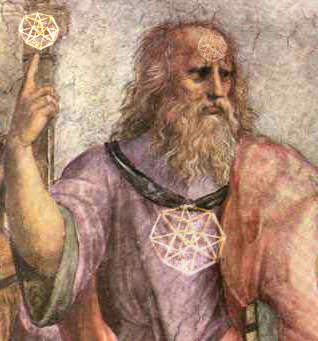 Larry King is like Greeks in Egypt learning something deep from their teachers.
Last night Larry did an episode on Tiger's infidelities and what he should do to repair his public image. I don't get the assumption that it's necessary for Tiger to worry about his public image. The man is a great golfer and makes plenty of money from golf itself. And as far as endorsements go, he's obviously not losing them. But even if he were in danger of losing the endorsements, why should he care? Why is there this assumed, oddly quasi-moral imperative for the guy to maintain his brand at all costs? He has other sources of income and even if he didn't he could live on what he's made. Who's to say that Tiger even likes being a huge brand? I have no idea, but the way Larry's guests talked about Tiger you'd think that the real thing he'd done wrong wasn't cheating on his wife, but harming his brand and violating some sort of trust we had in him, a trust he has an ethical duty to repair via carefully coached and phonily sincere interviews. (One even said that he shouldn't come out with his wife because that's such a cliche and would detract from the appearance of sincerity. Well what if he sincerely wants to make a statement with his wife, and she with him?) Anyway, Larry had a surprisingly Platonic moment with his panel of damage control doctors last night. They're all saying what Tiger should do and suddenly Larry asks:
Do you teach remorse? You're either remorseful or you're not. Or do you guys teach it?
BRAGMAN: You teach him how to show it, I mean, you know... (LAUGHTER)
KING: Would the old George Burns thing, the secret of sincerity -- if you can fake it, you've got it made?
Compare this to this exchange from Plato's dialogue, Gorgias:
Soc. Let me tell you then, Gorgias, what surprises me in your words; though I dare say that you may be right, and I may have understood your meaning. You say that you can make any man, who will learn of you, a rhetorician?
Gor. Yes.
Soc. Do you mean that you will teach him to gain the ears of the multitude on any subject, and this not by instruction [by which Socrates means the teaching of actual knowledge] but by persuasion?
Gor. Quite so.
Soc. You were saying, in fact, that the rhetorician will have, greater powers of persuasion than the physician even in a matter of health?
Gor. Yes, with the multitude-that is.
Soc. You mean to say, with the ignorant; for with those who know he cannot be supposed to have greater powers of persuasion.
Gor. Very true.
Soc. But if he is to have more power of persuasion than the physician, he will have greater power than he who knows?
Gor. Certainly.
Soc. Although he is not a physician:-is he?
Gor. No.
Soc. And he who is not a physician must, obviously, be ignorant of what the physician knows. Gor. Clearly.
Soc. Then, when the rhetorician is more persuasive than the physician, the ignorant is more persuasive with the ignorant than he who has knowledge?-is not that the inference?
Gor. In the case supposed:-Yes.
Soc. And the same holds of the relation of rhetoric to all the other arts; the rhetorician need not know the truth about things; he has only to discover some way of persuading the ignorant that he has more knowledge than those who know?
Gor. Yes, Socrates, and is not this a great comfort?-not to have learned the other arts, but the art of rhetoric only, and yet to be in no way inferior to the professors of them?
Subscribe to:
Posts (Atom)